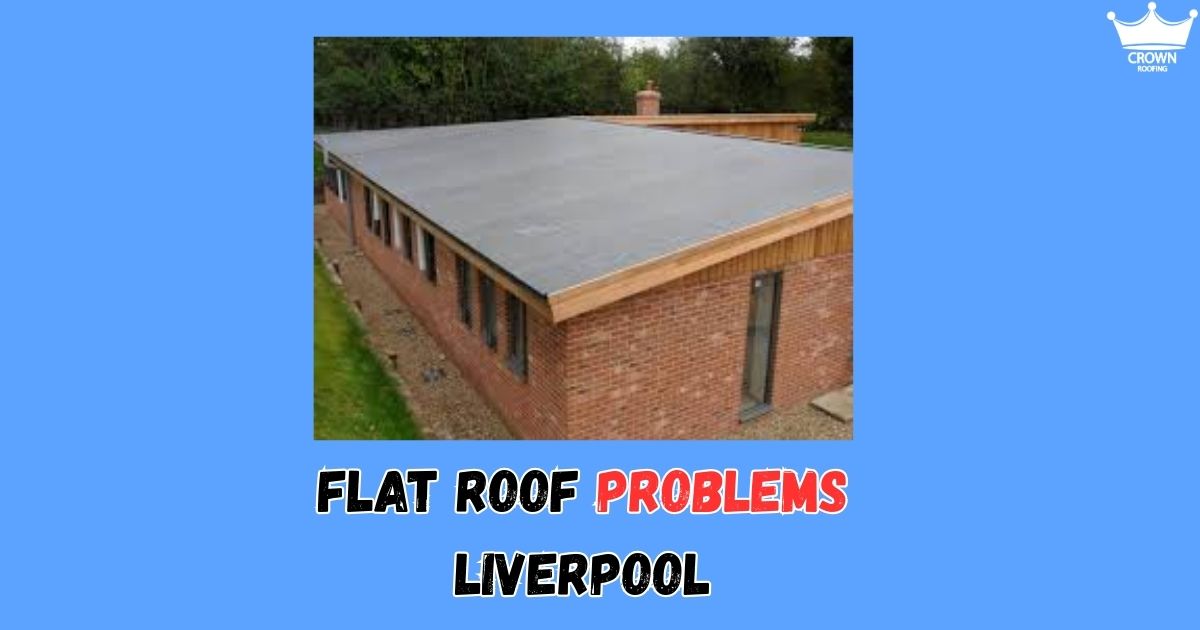
Flat roofs are common across Liverpool, especially on extensions, garages, bay windows and commercial-style properties. While they offer a clean, modern look, flat roofs also come with risks that many homeowners underestimate. The biggest problem is not sudden failure — it’s slow, hidden damage that goes unnoticed until serious leaks appear.
Understanding the most common flat roof problems in Liverpool can help you act early, avoid emergencies and extend the life of your roof.
Ponding water that never fully drains
One of the most ignored flat roof issues is standing water. After rainfall, flat roofs should drain within 24 to 48 hours. When water sits for longer, it puts constant pressure on the roof covering.
In Liverpool’s frequent rain, ponding water leads to:
-
Accelerated membrane wear
-
Increased risk of leaks
-
Sagging roof decks
-
Structural strain over time
Many homeowners assume this is normal for flat roofs, but persistent pooling is a warning sign that drainage or roof fall needs attention.
Small cracks that turn into major leaks
Flat roofing materials expand and contract with temperature changes. Over time, this movement creates hairline cracks that are easy to miss from ground level.
These cracks allow moisture to seep in slowly. Because flat roofs sit directly above ceilings, water damage spreads quietly through insulation and timbers before becoming visible indoors. By the time staining appears, repairs are often more extensive and expensive.
Failing seams and joins
Flat roofs rely heavily on sealed joints, especially around:
-
Roof edges
-
Skylights
-
Vents and pipes
-
Wall upstands
When these seams weaken, water finds an easy entry point. In many Liverpool homes, seam failure is the main cause of repeated flat roof leaks. Unfortunately, it’s also one of the most commonly overlooked issues during casual inspections.
Blocked outlets and gutters
Flat roofs depend on clear drainage systems. Leaves, moss and debris build up quickly, especially during autumn and winter.
Blocked outlets cause water to back up and overflow into weak areas. In some cases, water travels backward beneath the roof covering, soaking insulation and timber supports.
Regular clearing is simple but often neglected until a leak forces action.
Blistering and bubbling of the roof surface
Blisters form when air or moisture becomes trapped beneath the roof membrane. Sun exposure then causes these pockets to expand.
Blistering weakens the protective layer of the roof and increases the risk of punctures. Many homeowners ignore blisters because they don’t leak immediately, but once they burst, water ingress follows quickly.
Aging materials that have reached their limit
Many flat roofs across Liverpool still use older felt systems. While modern systems last much longer, traditional felt roofs often fail after 10 to 15 years.
Signs a flat roof is reaching the end of its life include:
-
Repeated minor repairs
-
Soft or spongy areas underfoot
-
Widespread cracking
-
Persistent damp smells indoors
Continuing to patch an aging flat roof usually costs more in the long run than replacing it with a modern system.
Poor ventilation causing internal damage
Flat roofs with inadequate ventilation trap moisture. Over time, this leads to:
-
Condensation build-up
-
Mould growth
-
Timber decay
-
Reduced insulation performance
These issues often appear inside the property rather than on the roof itself, making them easy to misdiagnose.
Why Liverpool weather makes flat roof problems worse
Liverpool’s climate accelerates flat roof deterioration. Regular rainfall, strong winds and coastal moisture expose weaknesses faster than in drier regions.
Once water enters a flat roof system, it spreads horizontally, affecting large areas before detection. This makes early intervention essential.
When repairs are no longer enough
Flat roof repairs work well when issues are localised and caught early. However, replacement becomes the smarter option when:
-
Leaks are recurring
-
Insulation is saturated
-
Structural decking is damaged
-
The roof is over 15–20 years old
A professional inspection helps determine the most cost-effective solution.
The value of local flat roof expertise
Diagnosing flat roof problems requires experience with local property types and weather patterns. Specialists like Crown Roofing Solutions regularly work on Liverpool flat roofs and understand where problems usually start and how to prevent repeat failures.
Local knowledge reduces guesswork and improves long-term results.
Conclusion
Flat roof problems rarely fail overnight. In Liverpool, they develop slowly through standing water, aging materials, blocked drainage and unnoticed cracks. Ignoring early signs often leads to major leaks, internal damage and higher costs.
Regular inspections and timely repairs protect your home and help flat roofs last far longer. Acting early is always cheaper than waiting until it’s too late.
FAQs
Is ponding water normal on flat roofs?
No. Some moisture is expected briefly, but standing water beyond 48 hours indicates a problem.
How long do flat roofs usually last in Liverpool?
Older felt roofs often last 10–15 years. Modern systems can last much longer with maintenance.
Can flat roof leaks spread before becoming visible?
Yes. Water often travels beneath the surface, causing widespread damage before signs appear.
How often should flat roofs be inspected?
At least once a year and after heavy storms.