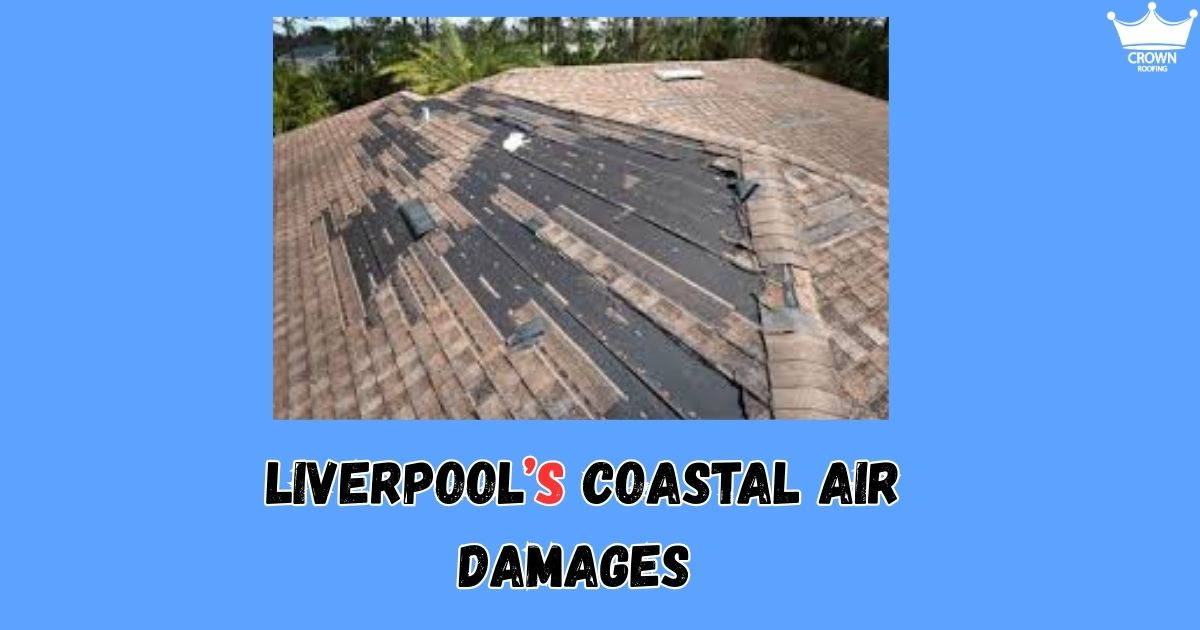
Liverpool’s coastal air damages roofs in ways many homeowners don’t notice until problems appear. While the city offers great views and a strong coastal atmosphere, it also exposes properties to salt, wind and moisture that slowly weaken roofing materials. This type of damage builds over time, which is why many people only realise the issue when leaks or structural problems start showing inside the home.
Liverpool’s Coastal Air Damages Roofs in Liverpool Homes
Liverpool’s location near the River Mersey and the Irish Sea means homes are constantly exposed to airborne salt and damp conditions. Even properties further inland are affected when strong winds carry salt particles across the city. Over time, Liverpool’s coastal air damages roof surfaces, joints and fixings, making them more vulnerable to wear compared to homes in non-coastal areas.
How Salt in the Air Breaks Down Roofing Materials
Salt is highly corrosive and plays a major role in roof deterioration. It accelerates rust in metal fixings, weakens flashing around chimneys, and reduces the lifespan of protective coatings on tiles. Once corrosion begins, it spreads beneath the surface and becomes difficult to detect early.
Many homeowners only become aware of this when they need Roof Tile Repairs Liverpool due to cracked or weakened tiles.
Wind Exposure Increases Roof Damage Over Time
Liverpool regularly experiences strong winds, especially in open or exposed areas. These winds gradually loosen tiles, shift ridge lines, and create small gaps where water can enter. Over time, even minor movement leads to bigger problems.
Homes in areas like Roofing Services in Crosby, Liverpool often experience faster wear because of higher exposure to coastal winds.
Moisture and Rain Make Coastal Damage Worse
Salt and wind weaken the roof, but moisture is what turns that weakness into real damage. Liverpool’s frequent rainfall allows water to enter small gaps and spread through insulation and timber structures. This leads to damp patches, mould, and reduced energy efficiency.
In many cases, homeowners first notice the issue when they need Roof Leak Repair Liverpool after internal damage appears.
Roof Types Most Affected by Coastal Conditions
Some roofing systems are more vulnerable than others in coastal environments. Tiled roofs can become porous over time, while older felt flat roofs often break down faster under constant moisture. Metal components such as flashing and fixings are especially at risk of corrosion.
This is commonly seen in properties covered by Roofing Services in Southport, Liverpool, where coastal exposure is stronger.
Early Warning Signs You Should Watch For
Liverpool’s coastal air damages roofs gradually, so early signs are easy to miss. Look for loose tiles, rust marks near flashing, crumbling mortar on ridge tiles, or damp smells in loft spaces. Repeated minor leaks after storms are also a warning sign.
Spotting these issues early can prevent costly repairs later.
Why Regular Roof Inspections Are Essential
Because coastal damage develops slowly, it is not always visible from the ground. Regular inspections help identify early signs of corrosion, movement, and moisture before they become serious problems. According to the National Federation of Roofing Contractors, routine maintenance is key to extending roof lifespan in coastal areas.
How to Protect Your Roof from Coastal Damage
Preventative maintenance can significantly reduce long-term damage. Replacing corroded fixings, repairing flashing early, and keeping gutters clear all help maintain roof performance. In some cases, upgrading to more durable materials like Fiberglass Roofing Liverpool can provide better resistance to moisture and weather.
Repair or Replace, What Is the Right Choice?
Not all roofs affected by coastal conditions need replacement. If damage is caught early, repairs are often enough. However, if corrosion is widespread or materials have weakened significantly, replacement may be more cost-effective.
A professional inspection helps determine the best solution for your property.
Final Thoughts
Liverpool’s coastal air damages roofs slowly but consistently through salt, wind and moisture exposure. Understanding the risks, spotting early warning signs, and carrying out regular maintenance can help homeowners avoid expensive repairs and extend the life of their roof.
FAQs
Does coastal air affect homes away from the waterfront?
Yes, wind carries salt particles inland across Liverpool.
How often should roofs be inspected?
At least once a year and after major storms.
Are newer roofs resistant to coastal damage?
They perform better but still require regular maintenance.
Can coastal damage be repaired?
Yes, if caught early. Delayed action often leads to replacement.